
7 Best Speech-to-Text APIs for Financial Services in 2026 (Compared & Reviewed)
Best speech-to-text APIs for financial services, compared: 1. Voibe 2. Deepgram 3. Azure AI Speech 4. AssemblyAI 5. Amazon Transcribe 6. Google Cloud 7. Gladia

TL;DR: The Best Speech-to-Text APIs for Financial Services in 2026
A recorded client call is some of the most sensitive audio a business can produce.
In a few minutes, a caller reads out an account number, a date of birth and a tax ID. On a hardship or insurance claim, they might add a medical diagnosis too.
So the transcript is only half the decision. The other half is what the API does with the call once the transcript exists.
I went through the pricing page, retention docs and security page of seven speech-to-text APIs. Here's how they rank for financial services:
- Voibe: best for zero data retention. Audio is deleted once the transcript is saved, transcripts after 24 hours, and nothing is used for training.
- Deepgram: best for PCI redaction and live transcription.
- Azure AI Speech: lowest price, $0.18 per hour.
- AssemblyAI: best redaction, including the audio file itself.
- Amazon Transcribe: best for teams already on AWS.
- Google Cloud Speech-to-Text: good training default, expensive standard tier.
- Gladia: redaction included in the price, but long default retention.
Key takeaways
| API | Best for | Batch list price | Watch out for |
|---|---|---|---|
| Voibe | Zero data retention | $0.25-$0.30/hour | No redaction, no SOC 2 report |
| Deepgram | PCI redaction, live calls | $0.258/hour | Trains on audio unless you opt out on every request |
| Azure AI Speech | Lowest price | $0.18/hour | Redaction is a separate service |
| AssemblyAI | Redacting text and audio | $0.21/hour | Trains on audio unless you opt out |
| Amazon Transcribe | AWS teams | $0.36/hour | Uses audio for improvement until you set an opt-out policy |
Key Takeaway
The Voibe API deletes call audio once the transcript is saved and deletes transcripts after 24 hours, with nothing to configure. Deepgram, AssemblyAI and Amazon Transcribe keep or train on audio by default until you opt out.
Why Financial Services Teams Struggle With Speech-to-Text APIs
Most speech-to-text APIs were built for podcasts, meetings and voice agents. Their defaults show it. Here's where they fall short on client calls.
1. Training is opt-out, not opt-in
- Deepgram: "Requests participate in the Model Improvement Program (MIP) by default, and Deepgram retains them" (Deepgram docs).
- Amazon Transcribe: may "store and use voice inputs" to improve Amazon's AI until you set an organisation-wide opt-out (Transcribe FAQ).
- AssemblyAI: trains on files unless you opt out. Free users can't opt out at all (AssemblyAI docs).
2. Audio and transcripts stick around
- Speechmatics keeps batch audio and transcripts for 7 days.
- Rev.ai keeps jobs for up to 30 days.
- AssemblyAI deletes audio within 48 hours but keeps transcripts for 30 days.
- Gladia keeps data for 3 weeks on paid plans and 1 year on free accounts.
Each one is an extra copy of a client call sitting outside your own systems.
3. Redaction costs extra and has gaps
- Most vendors sell PII redaction as an add-on.
- Deepgram's entity redaction works in English only.
- Amazon's Call Analytics redaction only supports US English and US Spanish (AWS docs).
4. Stereo calls can cost double
Call platforms often record the agent and the customer on separate channels. Deepgram, AssemblyAI, Gladia and Google bill each channel. A 10-minute stereo call is billed as 20 minutes.
The Four-Copy Audit: What Happens to a Call After Transcription
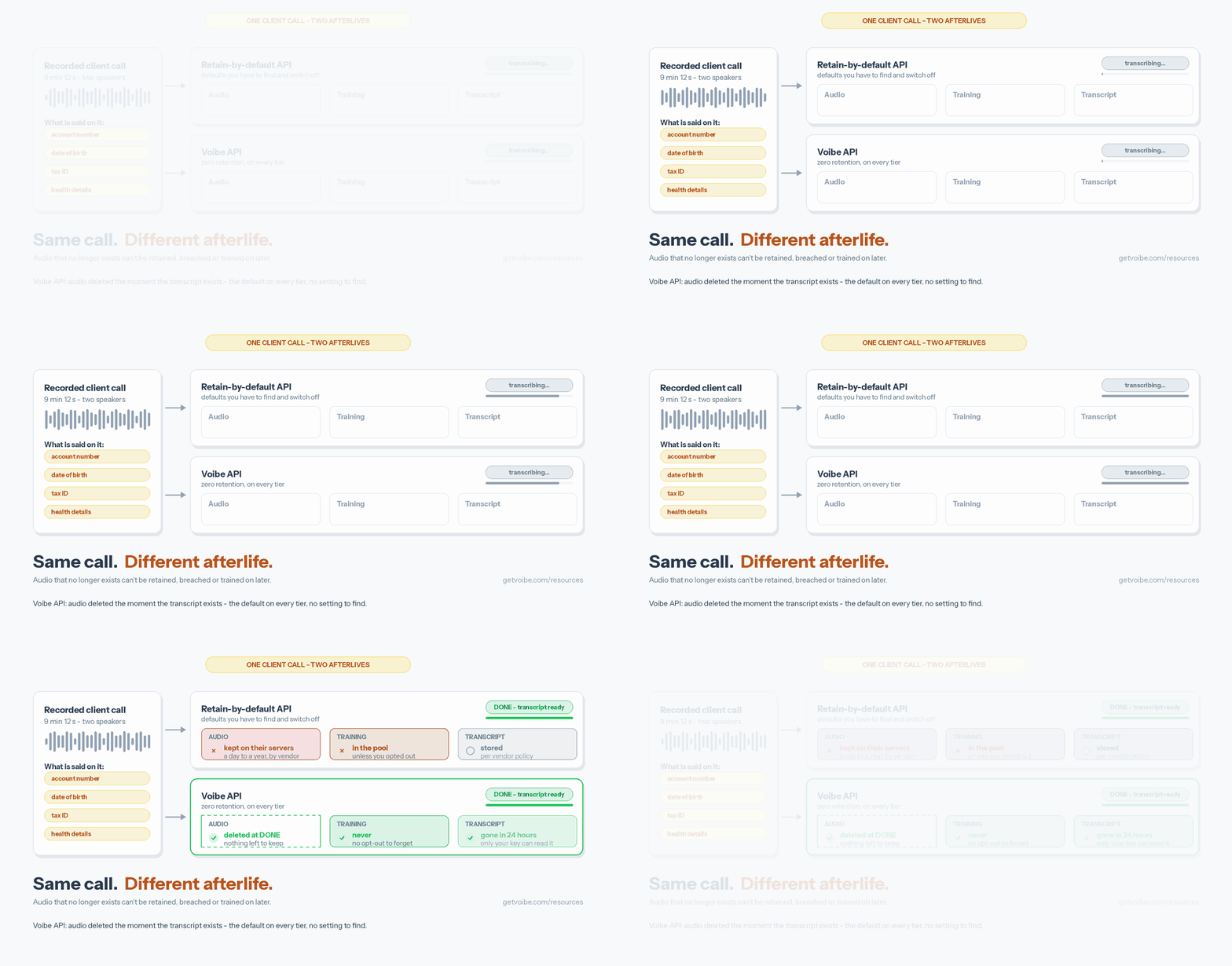
A call sent to a speech-to-text API can leave up to four copies behind:
- The audio copy. Is the recording kept after the transcript exists? For how long?
- The transcript copy. Is the text stored? When is it deleted?
- The training copy. Does any of it go into model training? Is that opt-in or opt-out?
- The log copy. Do request logs or debug data hold any of it?
APIs handle these copies in one of three ways:
- Keep by default, give you switches. This works only if every switch is set on every request.
- Store in your own storage. Azure batch works this way. You control deletion.
- Delete by design. The copies never pile up. The Voibe API is built this way.
The copy you actually need is your own. Firms usually have to keep call recordings or records of advice for years, and that's your job, not the vendor's. A vendor copy doesn't help you meet it. It just gives you one more place to defend in a breach.
For more on how retention promises get watered down, see zero data retention, explained.
What to Look For in a Speech-to-Text API for Financial Services
Seven checks. The first four are where these APIs really differ.
1. Training default
Find the line in the docs that says whether customer audio trains models. Check if it's opt-in or opt-out. A per-request opt-out is only as reliable as every piece of code that calls the API.
2. Retention for audio and transcripts
Vendors often delete audio fast and keep text for weeks. Ask for both numbers, and the shortest setting available.
3. Redaction coverage
Check the entity list for card numbers, CVVs, bank accounts and ID numbers. Then check which languages it works in. Decide if you need text redacted, audio redacted, or neither.
4. Compliance reports
Many procurement teams won't start a trial without a SOC 2 Type 2, ISO 27001 or PCI DSS report. Deepgram, AssemblyAI and the big clouds publish them. Voibe doesn't hold SOC 2 or ISO 27001 yet.
If calls include health information, you'll also want a BAA. Every API in this list offers one in some form, including Voibe on request. A BAA is a contract, not a certification, so still check the vendor's defaults.
5. Call audio handling
Look for stereo support, speaker labels and how multichannel files are billed.
6. Limits and throughput
Check file size caps, daily job limits and webhook support against your call volume.
7. Billing rules
Per-second billing, minimums per file and whether failed jobs are charged all change your real cost.
Speech-to-Text APIs for Financial Services Compared
All figures come from each vendor's own pricing page or docs, checked on 24 September 2026.
| API | Batch list price | Audio kept by default | Trains on your audio | PII redaction | SOC 2 | BAA |
|---|---|---|---|---|---|---|
| Voibe | $0.25-$0.30/hour | Deleted once the transcript is saved. Transcripts deleted after 24 hours. | Never | Not offered | No | On request |
| Deepgram Nova-3 | $0.0043/min ($0.258/hour) | Kept for model improvement unless you opt out | Yes, unless mip_opt_out=true | +$0.0020/min, English only | Type 1 and Type 2 | Enterprise customers |
| Azure AI Speech | $0.18/hour | Audio in your storage. Transcripts in your storage or kept 6 hours to 31 days. | Not logged by default | Separate Azure Language service | Yes (Azure) | Included in Microsoft's data protection terms |
| AssemblyAI | $0.21/hour (Universal-3.5 Pro) | Audio deleted in 24-48 hours. Transcripts kept 30 days. | Yes, unless you opt out | Text +$0.08/hour, audio +$0.05/hour | Type 1 and Type 2 | Self-serve |
| Amazon Transcribe | $0.006/min ($0.36/hour) | May be stored to improve Amazon AI | Yes, until you set an opt-out policy | +$0.0024/min | Yes (AWS) | HIPAA-eligible service |
| Google Cloud STT | $0.016/min ($0.96/hour) | Not logged unless you opt in | Only if you opt in | Separate DLP service | Yes (Google Cloud) | Covered by Google Cloud's BAA |
| Gladia | $0.61/hour Starter, from $0.20 Growth | 3 weeks on paid plans, 1 year on free | Depends on plan | Included | Type 2 | Available |
A note on ratings
These are infrastructure APIs, so review sites barely cover them. Capterra shows zero reviews for Deepgram, AssemblyAI and Gladia, and G2 couldn't be checked. I haven't made up a score. The ranking is based on published defaults, prices and features.
Speaker labels and summaries
On a call, you need to know who said what. A summary in the same response saves a second model call.
| API | Speaker labels | Summary in the response |
|---|---|---|
| Voibe | Included | Included, steered by your own prompt (up to 2,000 characters) |
| Deepgram | Included for pre-recorded audio | Yes (summarize=v2) |
| Azure AI Speech | Mono files only, not stereo | No |
| AssemblyAI | +$0.02/hour | Through its LLM Gateway, billed per token |
| Amazon Transcribe | Up to 30 speakers | Call Analytics only ($0.03/min) |
| Google Cloud STT | Yes, depending on language | No |
| Gladia | Included | Included |
Call Transcription API Pricing for a Financial Services Call Center
Take a mid-sized call center:
- 300 calls a day
- 8 minutes per call
- 22 working days a month
That's 52,800 minutes, or 880 hours of mono audio a month.
| Setup | Rate | Per month | Per call |
|---|---|---|---|
| Azure AI Speech batch | $0.18/hour | $158.40 | 2.4 cents |
| Google V2 dynamic batch | $0.003/min | $158.40 | 2.4 cents |
| Voibe API ($100 pack) | $0.25/hour | $220.00 | 3.3 cents |
| AssemblyAI + text redaction | $0.29/hour | $255.20 | 3.9 cents |
| Deepgram + redaction | $0.0063/min | $332.64 | 5.0 cents |
| Amazon Transcribe + redaction | $0.0084/min | $443.52 | 6.7 cents |
| Gladia Starter | $0.61/hour | $536.80 | 8.1 cents |
| Google V2 standard | $0.016/min | $844.80 | 12.8 cents |
| Amazon Transcribe Call Analytics | $0.03/min | $1,584.00 | 24 cents |
Google vs AWS vs Azure for call transcription
If you're already on one of the big clouds, here's how they compare on the same 880 hours:
- Azure AI Speech: $158.40 a month. Stereo files are billed once. Requests aren't logged by default. Speaker labels only work on mono files, and redaction is a separate service.
- Amazon Transcribe: $316.80 a month, or $443.52 with redaction. Stereo files are billed once. Set the AI services opt-out policy first.
- Google Cloud STT: $844.80 a month on standard, $158.40 on dynamic batch. Stereo doubles both. Training is opt-in only, and redaction is a separate service.
For stereo call recordings at the lowest price, Azure wins. If you need redaction built in, Amazon Transcribe is the simplest of the three.
Voibe isn't the cheapest
Azure batch and Google dynamic batch both cost $158.40. That's $61.60 a month (28%) less than Voibe's $220.
Redaction changes the numbers
Voibe is cheaper than every setup that includes redaction:
- $112.64 a month (34%) less than Deepgram with redaction
- $223.52 a month (50%) less than Amazon Transcribe with redaction
- $316.80 a month (59%) less than Gladia Starter
These aren't like-for-like. Those vendors remove the sensitive numbers. Voibe deletes the audio and the transcript instead.
Stereo doubles four of these bills
Deepgram, AssemblyAI, Gladia and Google charge per channel. With stereo recordings, Deepgram with redaction goes to $665.28 a month and Google V2 standard to $1,689.60. Amazon and Azure bill the file once.
Billing rules matter too
- Voibe bills per second and only on finished jobs. Failed jobs are free and minutes never expire.
- Amazon and Azure bill per second with no minimum.
- Rev.ai has a 15-second minimum per file.
1. Voibe Speech-to-Text API: Best for Zero Data Retention
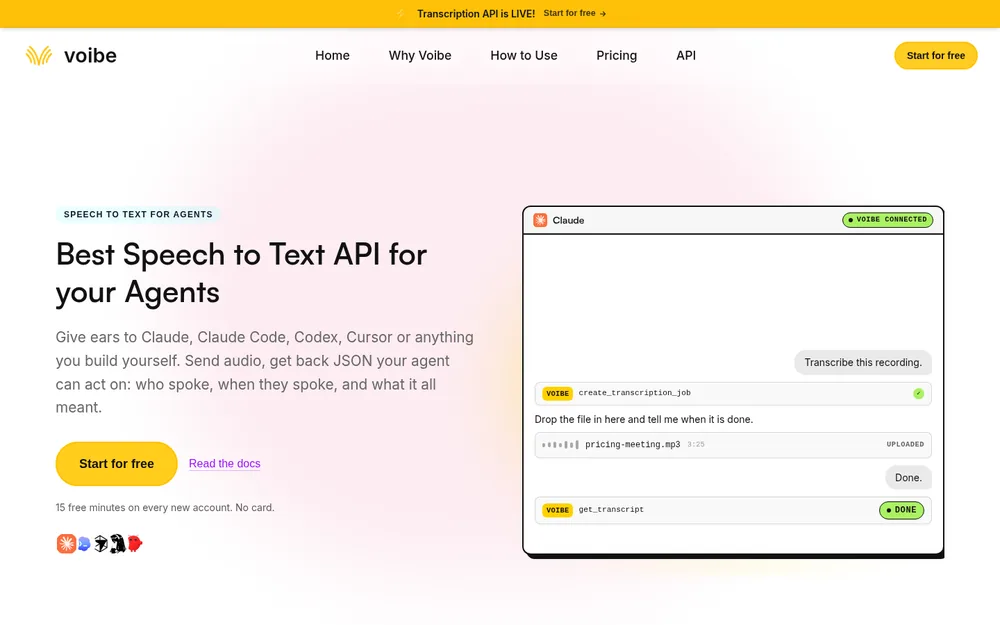
Voibe is the API we build. It's first on this list because it's the only one where all four copies are dealt with by default. Nobody on your team has to remember a flag.
What happens to your audio
From the API docs:
- Audio "is deleted once the transcript is saved."
- "Transcripts and summaries are deleted 24 hours after the job finishes."
- "Nothing you send is used to train models."
- Only the API key that created a job can read it.
A BAA is available on request, for teams whose calls include health information.
Transcription runs on the open-source Whisper large-v3-turbo model on zero-retention providers. Summaries run on the open-weight GPT-OSS 120B. No closed AI lab like OpenAI or Google touches the audio.
What you get back
- A transcript with speaker labels and timestamps
- A plain text version
- An optional summary, steered by a prompt of up to 2,000 characters
For call reviews, try a prompt like "list every commitment the agent made and every document the caller was asked to send."
Results can be sent to a signed webhook. Since transcripts are deleted after 24 hours, have your system save each one as it arrives.
Pricing
- $10 for 2,000 minutes ($0.30/hour)
- $25 for 5,250 minutes ($0.29/hour)
- $50 for 11,000 minutes ($0.27/hour)
- $100 for 24,000 minutes ($0.25/hour)
Billing is per second, only on finished jobs. Minutes never expire. New accounts get 15 free minutes with no card.
Where it falls short
- No SOC 2 or ISO 27001. The security page says so directly. If procurement needs a report, Voibe won't pass that step yet.
- No PII redaction. The transcript you keep still has every number the caller read out.
- No stereo or custom vocabulary in the API docs.
- Batch only. No live transcription during the call.
- Limits: 200 MB per file, 50 jobs a minute and 1,000 jobs a day per account.
Best for
Firms that transcribe recorded calls after the fact and want the vendor to hold nothing. The Voibe API launch post covers the full API, and how to transcribe a Zoom recording walks through a first job.
Start for free → 15 free minutes on every new account. No card.
2. Deepgram: Best for PCI Redaction and Live Calls
Deepgram has the most complete call-center toolkit on this list.
What stands out
- Redaction: a
pcigroup for card number, expiry and CVV, plus 50+ entity types including bank account and routing numbers. $0.0020 per minute. - Multichannel: up to 20 channels.
- Keyterm prompting: up to 100 terms for product and fund names.
- Live transcription: Nova-3 streaming at $0.0048 per minute (promotional rate).
- Compliance: SOC 2 Type 1 and Type 2, PCI, GDPR (pricing page).
- Self-hosting: enterprise customers can run it in their own VPC.
Pricing
- Nova-3 pre-recorded: $0.0043/min ($0.258/hour) pay-as-you-go
- Growth plan: $0.0036/min, from $4,000 a year
- $200 free credit
- 880-hour month with redaction: $332.64 mono, $665.28 stereo
Where it falls short
Training is on by default. You have to "add mip_opt_out=true as a query parameter of all API requests that you want to be excluded" (Deepgram MIP).
With the flag, Deepgram keeps nothing. Without it, requests are kept for model improvement. Ask Deepgram to enforce the opt-out on your whole account so a missed flag can't leak a call.
Redaction is English only and text only.
Best for
Teams that need PCI redaction or live agent assist, and can enforce the opt-out.
3. Azure AI Speech: Best Price
If your firm already runs on Microsoft, Azure AI Speech is the practical choice. It's also the cheapest list price here.
What happens to your audio
From Microsoft's data and privacy note:
- Real-time audio "is processed only on the Azure's server memory, and no data is stored at rest."
- For batch jobs, the audio comes from your own storage.
- Transcripts go to your storage, or to Microsoft storage with a time-to-live of 6 hours to 31 days (batch docs).
- Requests aren't logged by default.
Pricing
- Batch: $0.18 per hour, billed per second
- Real-time: $1.00 per hour
- Stereo files are billed once, not per channel
- 880-hour month: $158.40
Where it falls short
- Redaction isn't part of Speech. You send transcripts to the separate Azure Language service, billed separately, and its conversation PII API is in preview.
- I couldn't find a plain "we never train on customer audio" line in the official Speech docs. Ask your Microsoft rep for it in writing.
- The 5 free hours a month cover real-time only, not batch.
Best for
Microsoft shops that want the lowest price and can build their own redaction step.
4. AssemblyAI: Best Redaction, Including the Audio
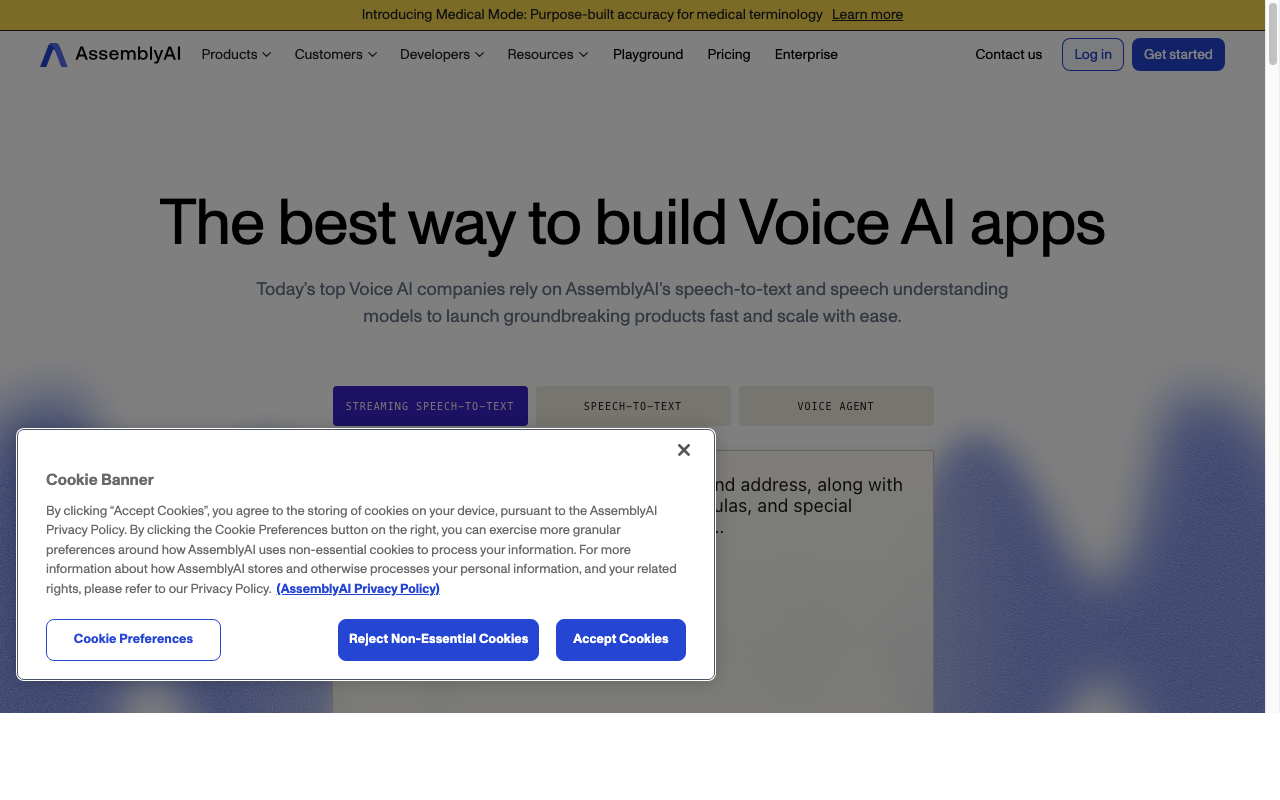
AssemblyAI has the best redaction of the seven. It's the only one that can remove PII from the audio file, not just the transcript.
What stands out
- Text redaction: account numbers, routing numbers, card number, CVV, expiry, passport numbers and passwords. $0.08 per hour.
- Audio redaction: PII is "beeped" out or silenced. $0.05 per hour.
- Compliance: its financial services page claims PCI DSS v4.0, SOC 2 Type 2 and ISO 27001. Its pricing page ties the PCI claim to the Voice Agent API, so check which products the report covers.
Pricing
- Universal-3.5 Pro: $0.21 per hour
- Universal-2: $0.15 per hour
- Diarization: +$0.02 per hour
- $50 free credit, no card
- 880-hour month with text redaction: $255.20 mono, $510.40 stereo
Where it falls short
- Files can be used for training unless you opt out from the Data Controls page. Free users can't opt out (AssemblyAI docs).
- Transcripts are kept for 30 days by default. You can set a TTL as low as one hour.
- Multichannel files are billed per channel.
Best for
Firms that need sensitive numbers removed from both the transcript and the recording.
5. Amazon Transcribe: Best for AWS Teams
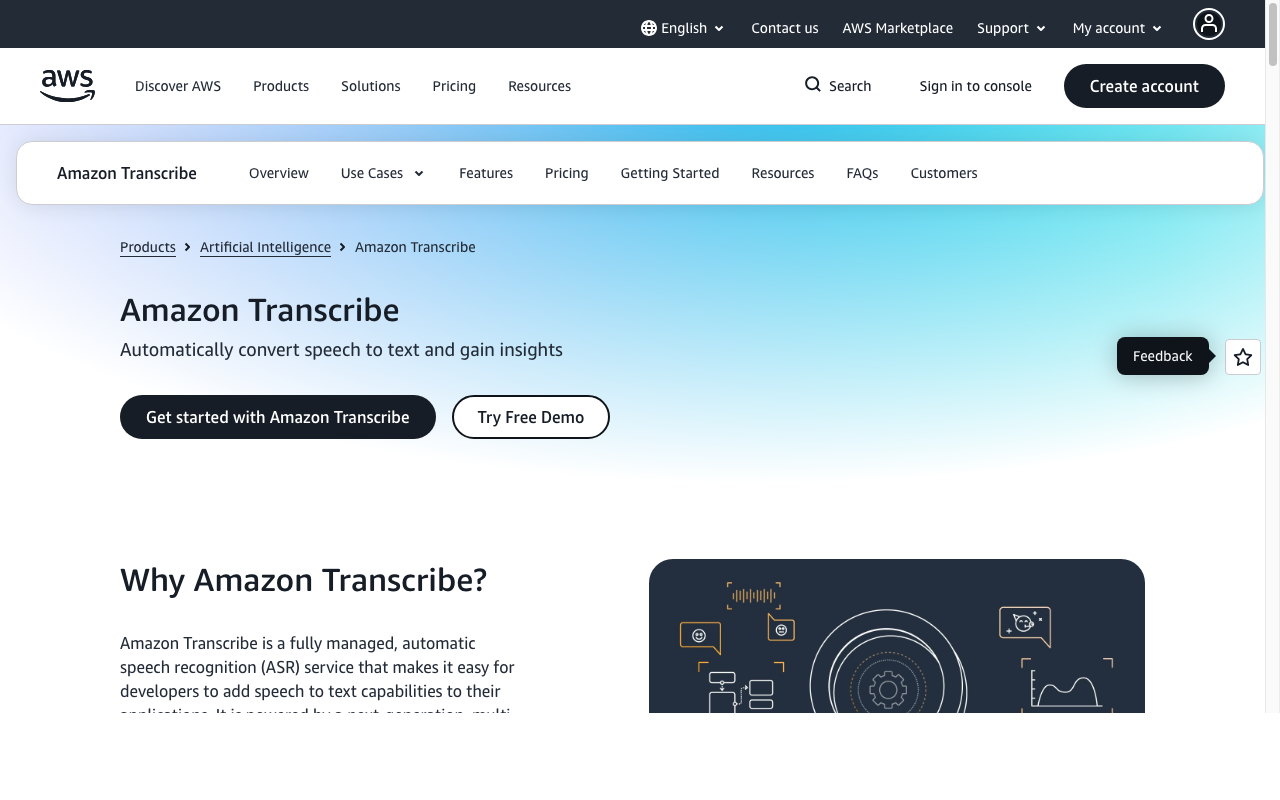
If your firm runs on AWS, Transcribe slots into the controls you already have.
What stands out
- Compliance: in scope for PCI DSS and SOC.
- Batch redaction: card numbers, CVV, expiry, PIN and bank details, each replaced with
[PII]. - Stereo: two-channel calls are billed once.
Pricing
- Standard batch: $0.006 per minute ($0.36/hour)
- Redaction: +$0.0024 per minute
- Call Analytics (sentiment, issue detection, summaries): $0.03 per minute
- Free tier: 60 minutes a month for 12 months (redaction not included)
- 880-hour month with redaction: $443.52
Where it falls short
The default. Amazon's FAQ says Transcribe "may store and use voice inputs processed by the service" to improve Amazon's AI.
You turn it off with an AWS Organizations AI services opt-out policy. Set it before the first call goes in.
Also, Call Analytics redaction only supports US English and US Spanish. For other languages, use standard batch.
Best for
AWS teams whose cloud admin will set the opt-out policy first.
6. Google Cloud Speech-to-Text: Best Training Default
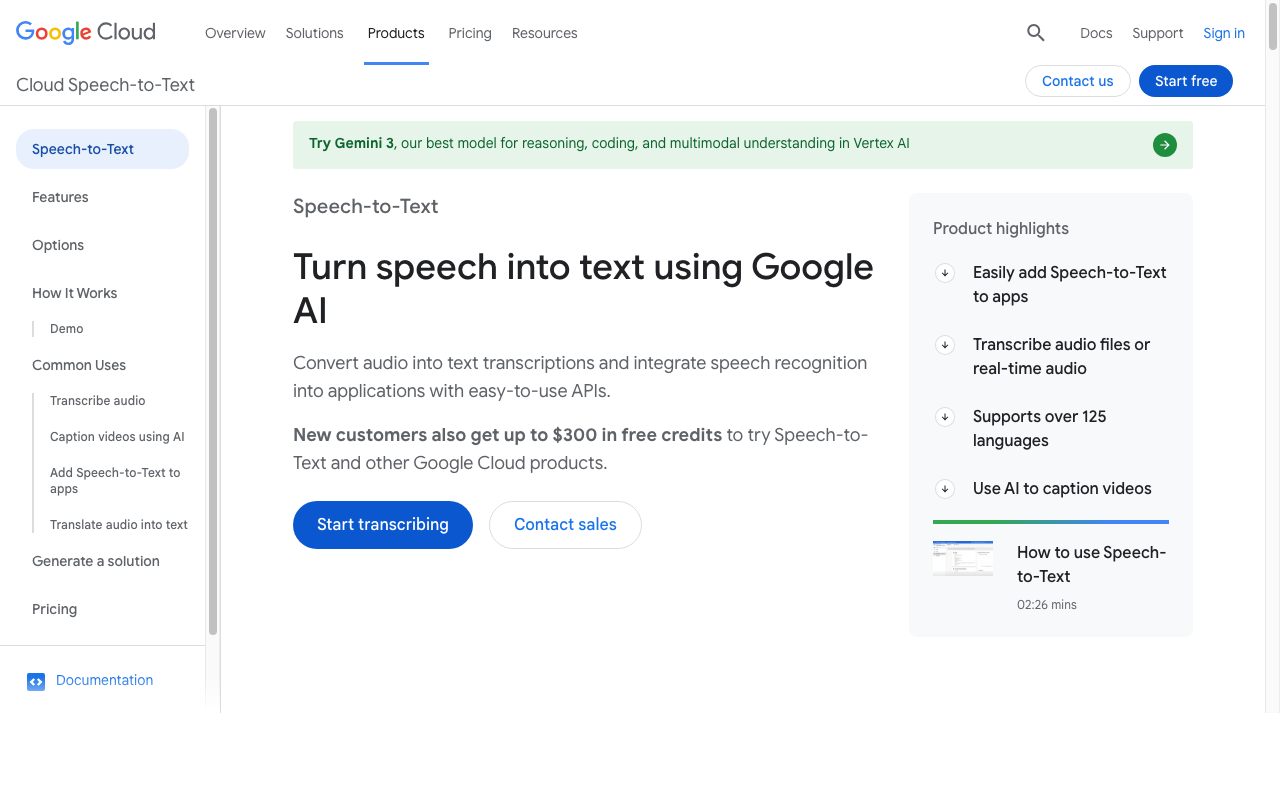
Google gets the training question right.
What stands out
Its data logging docs say "by default, Cloud Speech-to-Text does not log customer audio data or transcripts." Google only uses data from customers who opt in, and they get a discount for it.
Pricing
- V2 standard: $0.016 per minute ($0.96/hour)
- V2 dynamic batch: $0.003 per minute ($0.18/hour)
- Each audio channel is billed separately
- 880-hour month on standard: $844.80 mono, $1,689.60 stereo
Where it falls short
- The standard tier is the most expensive option here.
- No built-in redaction. Google's own setup sends transcripts to a separate service and silences audio with ffmpeg (Google docs).
- The data logging docs are written for V1. I couldn't find a V2-specific version.
Best for
Google Cloud teams that want training off without touching a setting, and can use dynamic batch.
7. Gladia: Redaction Included, Longer Retention
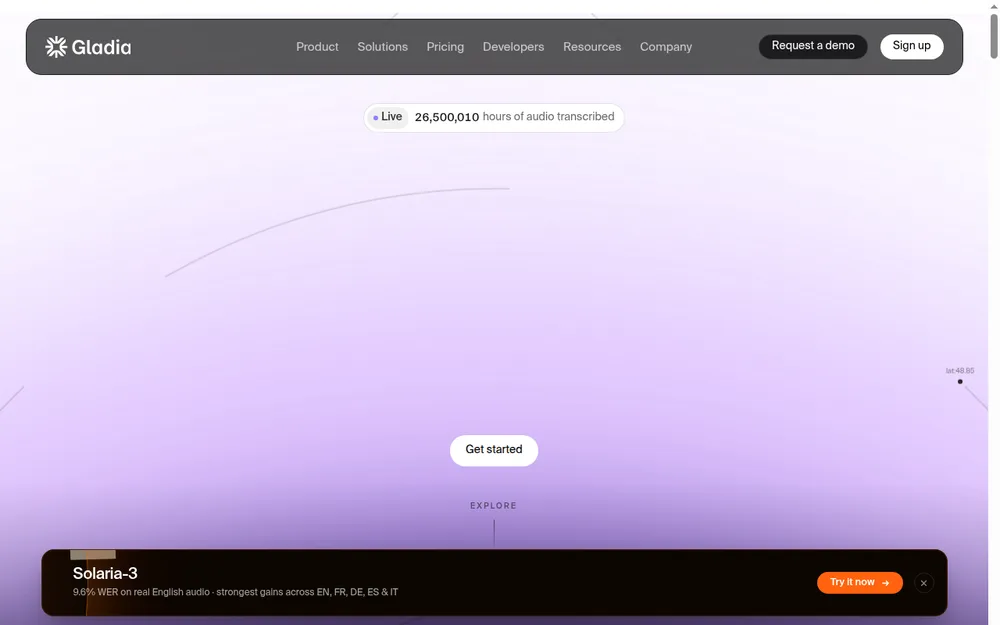
Gladia includes redaction and every other feature in the base price.
What stands out
- Redaction: bank accounts, card numbers, CVVs, national ID and tax numbers, and routing numbers. No add-on fee.
- Compliance: SOC 2 Type 2, ISO 27001 and GDPR, with BAAs available.
Pricing
- Starter: $0.61 per hour
- Growth: from $0.20 per hour, with an upfront commitment
- €50 free credit
- 880-hour month: $536.80 on Starter, from $176 on Growth
Where it falls short
- Its retention docs keep audio and transcripts for 3 weeks on paid plans and 1 year on free accounts.
- Zero retention is Enterprise only.
- The training policy isn't consistent. The compliance hub says Gladia "never trains on customer data by default." Its blog says Starter data "can be used for model training by default." Get it in writing.
- Redaction works on pre-recorded text only. Stereo is billed as two files.
Best for
Enterprise buyers who want redaction built in and can negotiate zero retention.
Other Speech-to-Text APIs We Looked At
Speechmatics
- Training is off by default. It's an opt-in program that gives you a discount.
- Batch Standard is $0.24 per hour and Enhanced $0.40 per hour (pricing).
- Lists ISO 27001 and SOC 2 Type II.
- No native PII redaction in the docs.
- Batch audio and transcripts are stored for 7 days (security docs).
- Rated 4.5/5 on Capterra, from only 2 reviews.
Rev.ai
- $0.20 per hour for the Reverb model, with a 15-second minimum per file.
- Keeps jobs for up to 30 days unless you delete them (Rev.ai security).
- No native PII redaction found.
How to Test a Speech-to-Text API on Real Calls Without Exposing Customer Data
You can't judge an API on sample audio. You need your own calls, with your accents, product names and phone-line quality. The risk is that the test itself leaks customer data.
Here's how to run a proof of concept safely.
1. Pick a small, representative set
10 to 20 calls is enough. Mix short and long calls, different agents, and a few with poor line quality.
2. Check the free tier's terms before uploading
Free tiers are where the worst defaults live:
- AssemblyAI free users can't opt out of model training.
- Gladia keeps free-account data for 1 year.
- Deepgram's $200 credit still needs
mip_opt_out=trueon every request. - Voibe's 15 free minutes get the same deletion rules as paid usage.
3. Switch off training and shorten retention first
- Deepgram: add
mip_opt_out=trueto every test request. - AssemblyAI: opt out on the Data Controls page (paid accounts) and set a TTL as low as 1 hour.
- Amazon Transcribe: set the AI services opt-out policy before the first upload.
- Azure: point batch output at your own storage.
4. Score what matters on a call
- Account numbers and amounts, digit by digit
- Customer and product names
- Whether agent and caller are labelled correctly
- Whether the summary matches what was agreed
5. Delete everything when you're done
Use each vendor's delete endpoint or shortest TTL. Then confirm in writing which copies, if any, still exist.
How to Choose a Speech-to-Text API for Financial Services
Answer these in order.
1. Do you need live text during the call?
- Yes → Deepgram. The Voibe API is batch only.
- No → go to question 2.
2. Does procurement need a SOC 2 or PCI report first?
- Yes → AssemblyAI or Deepgram. Turn off training on day one.
- Already on Azure or AWS → use their speech service. On AWS, set the opt-out policy first.
- No → go to question 3.
3. Do you want the vendor to keep nothing?
- Yes → Voibe API. Audio deleted at transcript, text deleted after 24 hours, no training.
- No → go to question 4.
4. Do sensitive numbers need removing before anyone reads the transcript?
- From the audio too → AssemblyAI.
- Card data → Deepgram's
pcigroup. - Without paying extra → Gladia.
Best Speech-to-Text API for Your Situation
| Situation | Best choice | Why |
|---|---|---|
| Hardship or insurance claim calls with health details | Voibe API | Audio deleted at transcript, text after 24 hours, no training, BAA on request |
| Small advice practice, a few client reviews a week | Voibe API | $10 buys 2,000 minutes that never expire |
| Bank or insurer on Microsoft 365 and Azure | Azure AI Speech | $0.18/hour batch, no logging by default |
| Lender that runs on AWS | Amazon Transcribe | PCI and SOC scope. Set the opt-out first. |
| Card payments taken over the phone | Deepgram | pci redaction group |
| Recordings shared with PII removed from the audio | AssemblyAI | Native audio redaction, +$0.05/hour |
| Live agent assist during calls | Deepgram | Nova-3 streaming at $0.0048/min |
| Procurement needs SOC 2 Type 2 before a trial | AssemblyAI or Deepgram | Both publish SOC 2 Type 2 |
| Lowest monthly bill, mono recordings | Azure AI Speech | $158.40 for 880 hours |
| Stereo recordings at volume | Azure or Amazon Transcribe | Both bill the file once, not per channel |
| Redaction without add-on fees | Gladia | Included in every plan |
| Over 1,000 recordings a day through one account | Azure, AWS or Deepgram | Voibe's limit is 1,000 jobs a day per account |
Frequently Asked Questions
Privacy and Training
Which speech-to-text APIs train on customer audio by default?
Deepgram, Amazon Transcribe and AssemblyAI use customer audio for model improvement by default unless you opt out. Deepgram's opt-out is the mip_opt_out=true flag on each request. Amazon's is an AWS Organizations AI services opt-out policy. AssemblyAI's is a Data Controls setting for paid accounts. Google only uses data if you opt in. The Voibe API never trains on submitted audio.
Does the Voibe speech-to-text API store call recordings?
No. The Voibe API deletes audio once the transcript is saved. Transcripts and summaries are deleted 24 hours after the job finishes. Nothing is used to train models, and only the API key that created a job can read it.
Is zero data retention the same as compliance?
No. Zero data retention means the vendor can't leak or train on audio it has already deleted. Compliance is a wider assessment your firm makes, including what reports and contracts the vendor offers. Voibe offers a BAA on request but doesn't hold SOC 2 or ISO 27001 certification.
Redaction and Call Audio
Which speech-to-text APIs can redact credit card and account numbers?
Deepgram ($0.0020/min, with a pci group), AssemblyAI (text $0.08/hour, audio $0.05/hour), Amazon Transcribe batch ($0.0024/min) and Gladia (included in the price). Azure and Google redact through separate services. The Voibe API doesn't redact. It deletes the audio instead.
Do stereo call recordings cost more to transcribe?
On some APIs. Deepgram, AssemblyAI, Gladia and Google bill each channel, so a 10-minute stereo call is billed as 20 minutes. Amazon Transcribe and Azure AI Speech bill the file once.
Pricing
How much does it cost to transcribe 880 hours of calls a month?
At list prices on 24 September 2026: $158.40 on Azure batch, $220.00 on the Voibe API ($100 pack), $255.20 on AssemblyAI with text redaction, $332.64 on Deepgram with redaction, $443.52 on Amazon Transcribe with redaction, $536.80 on Gladia Starter and $844.80 on Google V2 standard.
What is the best call transcription API for financial services?
It depends on what your risk team needs. For zero data retention with nothing to configure, the Voibe API deletes audio once the transcript is saved and transcripts after 24 hours. For PCI redaction or live transcription, Deepgram. For redacting the audio itself, AssemblyAI. For the lowest price on Microsoft, Azure AI Speech.
What is the cheapest call transcription API?
Azure AI Speech batch at $0.18 per hour. Google V2 dynamic batch matches it at $0.003 per minute. The Voibe API costs $0.25 to $0.30 per hour, billed per second on finished jobs only.
Choosing and Testing an API
Which speech-to-text API has the most transparent pricing?
Voibe, Deepgram, AssemblyAI, Amazon Transcribe and Google publish full per-minute or per-hour rates. Voibe also publishes its billing rules: per second, charged only when a job finishes, with prepaid minutes that never expire. Microsoft publishes Azure's rates too. Gladia's Growth rate depends on an upfront commitment, so the real price comes out of a sales conversation.
How do I test a speech-to-text API with real customer calls without exposing their data?
Use 10 to 20 representative calls. Before uploading, switch off training (Deepgram mip_opt_out=true, AssemblyAI Data Controls, the AWS AI services opt-out policy) and set the shortest retention available. Avoid free tiers that train or retain by default: AssemblyAI free users can't opt out, and Gladia keeps free-account data for 1 year. Voibe's 15 free minutes follow the same deletion rules as paid usage.
What should I check before sending customer audio to a transcription API?
Four things: whether the vendor keeps the audio after the transcript exists, how long it keeps the transcript, whether any of it is used for model training, and whether logs hold a copy. Then check PII redaction coverage and whether the vendor holds a SOC 2 Type 2 report if your procurement team needs one.
Compliance Reports
Which speech-to-text APIs offer a BAA?
All seven in this list offer one in some form. Voibe offers a BAA on request. AssemblyAI lets you sign one self-serve. Deepgram offers one to Enterprise customers, and Gladia makes them available. Microsoft includes a BAA in its standard data protection terms, Google Cloud's BAA covers Speech-to-Text, and AWS lists Transcribe as a HIPAA-eligible service. A BAA is a contract, not a certification.
Which speech-to-text APIs have SOC 2 Type 2?
Deepgram, AssemblyAI, Gladia and Speechmatics publish SOC 2 Type 2 (Deepgram also lists Type 1). Amazon, Microsoft and Google cover their speech services under their cloud-wide SOC reports. Voibe doesn't hold SOC 2 yet.
Final Verdict: The Best Speech-to-Text API for Financial Services
All seven APIs transcribe calls well. The difference is what they leave behind.
- Want the vendor to keep nothing? Pick the Voibe API. $0.25 to $0.30 an hour.
- Need PCI redaction or live transcription? Pick Deepgram, and switch off training.
- Want the lowest price on Microsoft? Pick Azure AI Speech.
- Need the audio itself redacted? Pick AssemblyAI.
More reading:
- The best speech-to-text API for agents, covering streaming and failed-job billing
- Dictation for financial advisors, for client notes without recording the client
- Why offline dictation matters
Get an API key and try your first call with 15 free minutes → No card needed.
Best AI Dictation and Meeting Notes for Confidential Work
Draft letters, notes and emails 5x faster. Get meeting notes without a bot joining your call. Nothing used to train AI.
- Mac + Windows
- No bot in your calls
- Nothing used to train AI
- 7-day free trial
Want to compare plans first? View pricing →
Related Articles
The Best Speech-to-Text API for Agents
Eight APIs priced the way an agent workload bills.
Voibe Speech-to-Text API
Three endpoints, per-second billing, zero retention.
Zero Data Retention, Explained
What the fine print does to a retention promise.
Dictation for Financial Advisors
Same-day client notes without recording the client.