
8 Best AI Medical Scribe Tools for Doctors & Physicians (2026)
Compare the 8 best AI medical scribe tools for doctors in 2026 on privacy, cost, and setup. On-device dictation vs ambient scribes — pricing, HIPAA, and ratings.

The best AI medical scribe for doctors in 2026 depends on what you optimize for: privacy, cost, or hands-off automation. If privacy, cost-effectiveness, and instant setup are your priorities, Voibe is the strongest choice — it transcribes speech entirely on-device on your Mac, costs $149 once with no subscription, and requires no Business Associate Agreement because no patient audio ever leaves the device. If you want a hands-off ambient scribe that listens to the visit and writes the note for you, Freed AI is the best value for solo and small practices, while Abridge and Nuance DAX Copilot lead at the health-system scale.
This guide compares 8 AI medical scribe and clinical documentation tools across the two approaches doctors actually use in 2026: ambient AI scribes that auto-generate notes from the patient conversation, and on-device dictation that keeps every byte of Protected Health Information (PHI) on your own machine. We rank each on privacy and PHI handling, total cost of ownership, setup effort, EHR integration, and clinical workflow fit.
Key Takeaway
For privacy, cost, and easy setup, an on-device tool like Voibe wins — $149 once, nothing uploaded, no BAA needed. For fully hands-off note generation, ambient scribes (Freed, Abridge, DAX Copilot) capture the conversation automatically but send audio to the cloud and bill $39–$830+ per provider per month.
Key Takeaways: AI Medical Scribe Tools at a Glance
| Tool | Approach | Best For | Key Strength |
|---|---|---|---|
| Voibe | On-device dictation | Privacy, cost, simplicity | 100% local, $149 one-time, no BAA needed |
| Freed AI | Ambient scribe | Solo & small practices | Best-value ambient notes, fast setup |
| Heidi Health | Ambient scribe | Doctors testing ambient AI | Genuine free tier |
| Suki AI | Voice-first assistant | EHR voice commands | Spoken ordering + chart Q&A |
| Abridge | Ambient scribe | Health systems | #1 Best in KLAS, deep Epic integration |
| Nuance DAX Copilot | Ambient scribe | Enterprise EHR depth | Largest medical vocabulary, Microsoft-backed |
| DeepScribe | Ambient scribe | Specialty practices | Human QA review layer |
| Nabla | Ambient scribe | Mid-size organizations | Multilingual ambient capture |
Here are the problems driving doctors to rethink scribes in 2026, the criteria that matter, a review of each tool, a decision tree, and a use-case cheat sheet.
Why Doctors Are Rethinking AI Medical Scribes in 2026
AI medical scribes have moved from novelty to mainstream — but three pressures are pushing physicians to re-evaluate which tool they use and how it handles patient data.
- Recurring cost stacking. Ambient scribes bill per provider per month, indefinitely. At Suki AI's $299/month or an Abridge-class enterprise rate near $600/month, a single physician pays $10,764–$21,600 over three years — before EHR-integration and setup fees. For a small practice, several seats multiply that into a permanent line item.
- Cloud PHI exposure. Every ambient scribe records the patient encounter and transmits that audio to remote servers for processing. Even with a signed Business Associate Agreement (BAA), that is one more vendor your HIPAA Security Officer must vet, document, and re-audit annually — and one more place patient conversations are stored outside your control. See our dictation and HIPAA guide for how PHI data flow maps to compliance obligations.
- Setup and integration friction. Enterprise scribes like Nuance DAX Copilot and DeepScribe require EHR integration projects, implementation fees ($500–$1,000+), and onboarding before the first note. For a solo doctor who just wants to document faster today, that is a heavy lift.
These pressures do not mean ambient scribes are wrong — for high-volume clinics that want fully hands-off documentation, they are transformative. But they explain why privacy-conscious and cost-sensitive doctors increasingly pair or replace them with an on-device approach.
Info
PHI never has a compliance problem if it never leaves the device. On-device tools transcribe audio locally, so there is no cloud transmission to secure, no BAA to sign, and no vendor audit trail to maintain.
Ambient Scribes vs On-Device Dictation: Two Ways AI Documents Care
There are two fundamentally different AI approaches to clinical documentation, and choosing the right tool starts with knowing which one fits your workflow.
Ambient AI scribes (Abridge, Suki, Nuance DAX Copilot, Freed, Heidi, Nabla, DeepScribe) listen to the full doctor-patient conversation in the background and generate a structured note automatically. You speak naturally to the patient; the AI extracts the SOAP note afterward. This is the most hands-off option, but it depends on cloud processing, recurring fees, and recording the entire encounter.
On-device dictation (Voibe) converts the words you deliberately speak into text, locally on your Mac, wherever your cursor sits. With hands-free long-form mode, you can narrate a full note in one continuous session without holding a key — a voice-driven scribe workflow — during or after the visit, with nothing uploaded. This gives you full control over content and privacy at a one-time cost, in exchange for narrating the note yourself rather than having it auto-generated from the conversation.
Each maps to the pressures above: ambient scribes solve the typing-burden problem but add cost and cloud exposure; on-device dictation solves the privacy and cost problem while keeping you in the documentation loop.
What to Look For in an AI Medical Scribe: 7 Evaluation Criteria
Use these seven criteria to evaluate any AI medical scribe or clinical documentation tool. Each maps directly to a cost, compliance, or workflow consequence.
- PHI data flow and privacy. Determine exactly where patient audio goes. On-device tools process locally with nothing uploaded; cloud scribes transmit and store audio on vendor servers. This single factor drives your HIPAA risk analysis more than any other.
- HIPAA and BAA support. If a vendor processes PHI, you need a signed BAA. Confirm it exists, is current, and covers your audio sources (including telehealth platforms). On-device tools remove the BAA requirement because there is no third-party processor.
- Total cost of ownership. Compare the three-year cost, not the monthly sticker. A $79/month scribe is $2,844 over three years; a $149 one-time license is $149. Multiply by the number of providers.
- Setup and onboarding effort. Can you start today, or does it require an EHR integration project and implementation fees? Solo doctors value same-day setup; large systems can absorb longer rollouts.
- EHR integration depth. Decide whether you need a note pushed automatically into Epic or Cerner, or whether system-wide text insertion into any field is enough. Deep integration costs more and takes longer to deploy.
- Documentation accuracy and clinical vocabulary. Look for strong handling of medical terminology, drug names, and your specialty's vocabulary. Tools with customizable dictionaries or human QA reduce correction time.
- Workflow control. Ambient capture is hands-off but records everything; deliberate dictation gives you precise control over what is documented. Match the tool to how you prefer to work and what you are comfortable recording.
Quick Comparison: 3-Year Cost and Privacy by Tool
The table below compares all eight tools on approach, where data is processed, pricing, three-year cost per provider, and third-party rating. Pricing is per provider unless noted and reflects published 2026 rates; enterprise scribe pricing is sales-led and varies by deployment.
| Tool | Processing | Pricing (per provider) | ~3-Year Cost | Rating |
|---|---|---|---|---|
| Voibe | On-device (local) | $149 lifetime / $59 yr / $7.50 mo | $149 | 4.8/5 Product Hunt |
| Freed AI | Cloud | $39–$119/mo | $2,844 (Core) | 4.6/5 G2, 4.9/5 Capterra |
| Heidi Health | Cloud | Free / $40 / $150 mo | $0–$5,400 | 5.0/5 G2 (small sample) |
| Suki AI | Cloud | $299–$399/mo | $10,764+ | KLAS-recognized |
| Abridge | Cloud | ~$600/mo (enterprise) | ~$21,600 | #1 Best in KLAS (Ambient AI) |
| Nuance DAX Copilot | Cloud (Azure) | $369–$830/mo + setup | ~$21,600 | Widely deployed, KLAS-rated |
| DeepScribe | Cloud | ~$350–$500/mo + setup | ~$14,400 | 98.8/100 KLAS (2025) |
| Nabla | Cloud | Contract (~$119/mo anchor) | ~$4,284+ | Sales-led |
1. Voibe — Best for Privacy, Cost, and Easy Setup
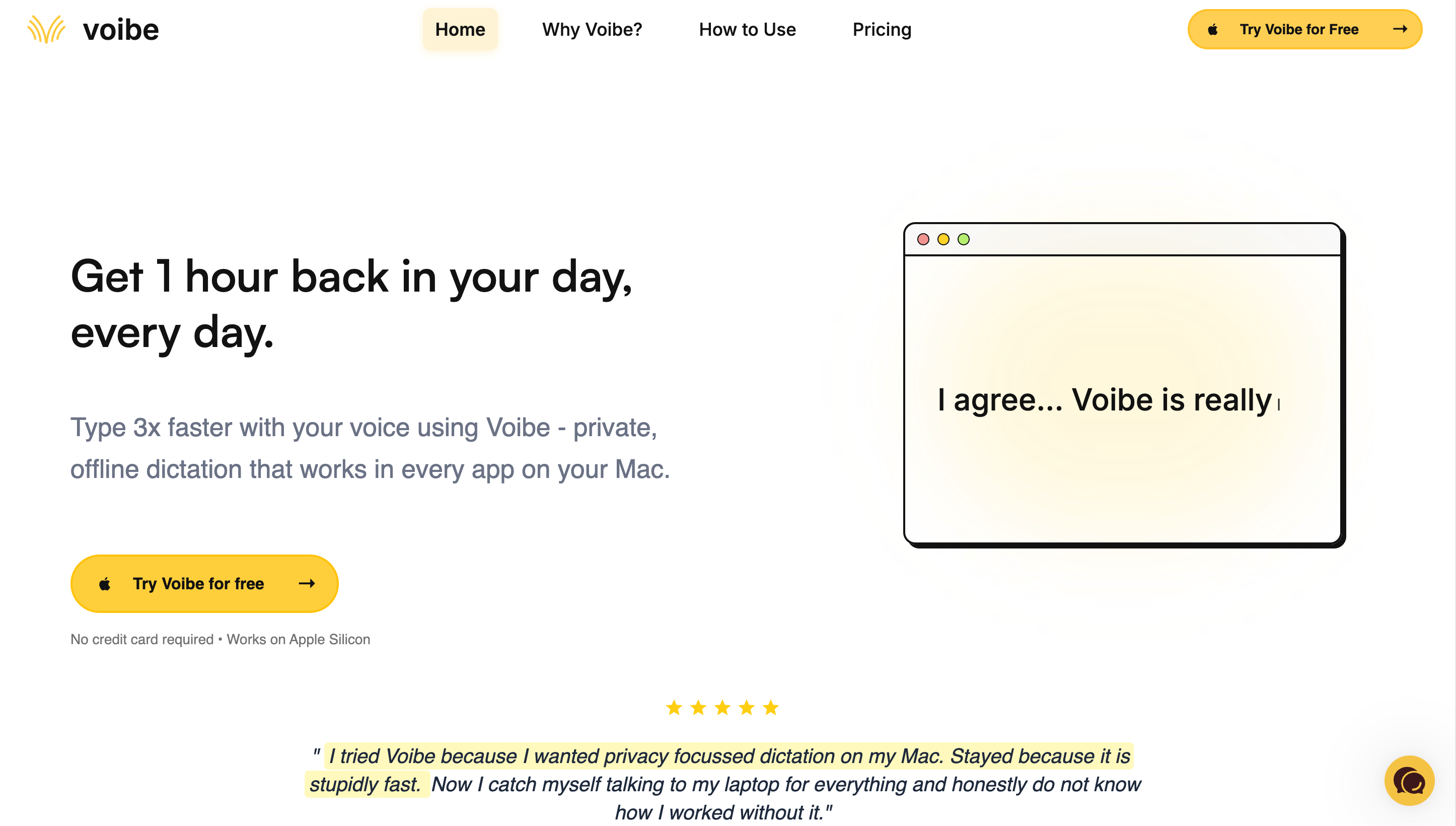
Voibe is a dictation app for Mac and Windows with an on-device mode on Apple Silicon that transcribes your speech locally on Apple Silicon using OpenAI Whisper models, with no audio ever sent to the cloud. It is the strongest choice for doctors whose priorities are privacy, cost-effectiveness, and setup that takes minutes, not an implementation project. With its hands-free long-form dictation mode, Voibe now works as a private medical scribe: you can run a continuous, hands-free session and narrate a full clinical note end to end without holding a key — and every word is transcribed locally on your own machine.
It is worth being precise about the workflow. Voibe is voice-driven documentation you control, not ambient capture: you speak the note (during or right after the encounter) rather than having an AI auto-generate it from a recording of the patient conversation. For physician-driven scribing, that distinction is a feature — you decide exactly what is documented, and the cloud, the subscription, and the BAA are removed entirely. You can dictate a SOAP note, discharge summary, or referral letter into any text field, including an EHR note box, and the audio is processed and discarded on your own Mac. With transcript storage disabled, no dictation history is retained on the device either.
Key Features
- Hands-free long-form dictation — run continuous sessions and narrate a full note without holding a key, so it works as an on-device medical scribe
- 100% on-device transcription on Apple Silicon (M1–M4) using OpenAI Whisper models — no cloud, works fully offline
- Optional zero-retention mode: audio is discarded after transcription and transcript history can be disabled
- Bulk-editable Custom Vocabulary for clinical terms, drug names, and specialty abbreviations
- System-wide text insertion — works in any app or EHR field where your cursor is
- Supports 90+ languages via Whisper for multilingual practices
- Lightweight menu-bar app, not an Electron resource hog
Pros
- No PHI leaves the device — no BAA required, dramatically simpler HIPAA analysis
- Hands-free long-form mode supports scribe-style, continuous note dictation without holding a key
- One-time $149 lifetime price; roughly 95–99% cheaper than ambient scribes over three years
- Set up in minutes with no EHR integration project or implementation fee
- Works offline, so spotty clinic Wi-Fi never interrupts documentation
- You control exactly what is documented — nothing is recorded that you did not speak
Cons
- Voice-driven, not ambient — you narrate the note rather than having it auto-generated from the patient conversation
- macOS only (Apple Silicon); no Windows, web, or native EHR-embedded version
- No dedicated Epic/Cerner connector, auto-coding, or billing-code suggestions
- General Whisper models are not trained on a proprietary 400,000-term medical dictionary, so rare pharmacology may need Custom Vocabulary entries
Pricing
Voibe costs $7.50/month, $59/year, or $149 one-time for lifetime access. A 7-day free trial is available. There is no per-provider cloud meter and no subscription required for the lifetime license.
User Reviews
Voibe holds a 4.8/5 rating on Product Hunt, where early reviewers praise its speed, complete offline privacy, and accuracy.
Best for: Solo physicians and small practices on Mac who want fast, private, low-cost documentation and are comfortable dictating notes themselves rather than using ambient capture.
2. Freed AI — Best Ambient Scribe Value for Small Practices
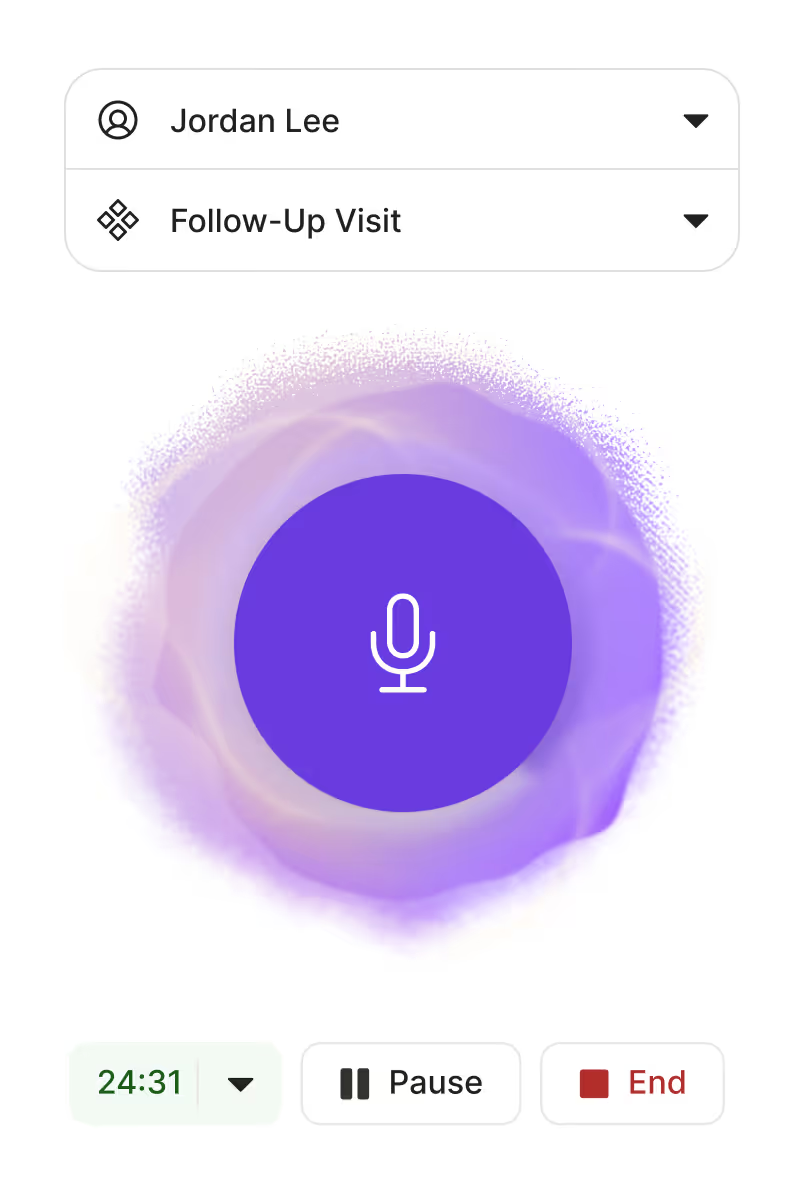
Freed AI is an ambient medical scribe built by clinicians for solo and small-practice physicians who want auto-generated notes without enterprise complexity or pricing. It listens to the patient encounter and produces a structured note in under a minute, and it is the best-value entry point into ambient documentation for independent doctors.
Key Features
- Ambient capture that auto-generates SOAP-style notes from the visit
- Specialty-aware templates and editable note formats
- EHR push and ICD-10 coding on the higher tier
- Fast onboarding designed for individual clinicians
- Signed BAA for HIPAA-covered use
Pros
- Lowest entry price among mainstream ambient scribes
- Quick setup with no enterprise integration project
- Strong, consistent third-party ratings from clinicians
Cons
- Patient audio is processed in the cloud, so a BAA and ongoing vendor vetting are required
- Recurring per-provider subscription that never ends
- Note cap on the Starter tier (40 notes/month)
Pricing
Freed offers Starter at $39/month (40 notes), Core at $79/month (unlimited notes), and Premier at $119/month monthly (or ~$104/month billed annually) with EHR push and ICD-10 coding, per provider. Over three years, Core totals about $2,844 per provider.
User Reviews
Freed holds 4.6/5 on G2 and 4.9/5 on Capterra, with reviewers citing flat pricing and natural note style.
Best for: Solo and small-practice doctors who want hands-off ambient notes at the lowest mainstream price and accept cloud processing with a BAA.
3. Heidi Health — Best Free Tier for Trying Ambient AI
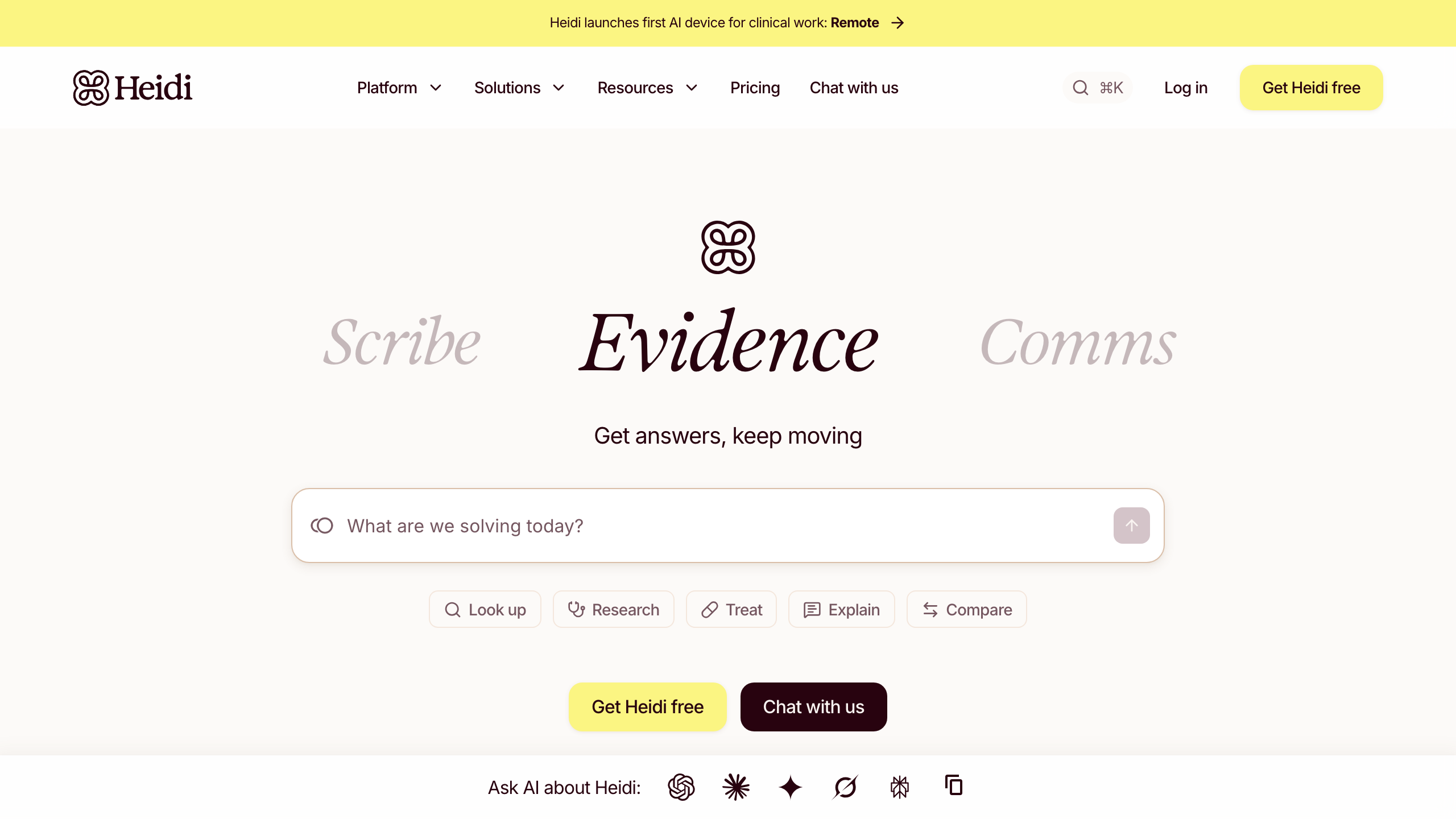
Heidi Health is an ambient AI scribe with the most genuine free plan in the category, making it the easiest way for a doctor to test ambient documentation before committing budget. It generates structured notes from consultations and offers customizable templates.
Key Features
- Free plan with unlimited basic consults and dictation
- Customizable note templates and "Ask Heidi" prompts
- EHR integration on paid plans
- Web and mobile apps
- Signed BAA available for HIPAA use
Pros
- Real free tier, not just a short trial
- Flexible templates for different note types
- Strong early review scores
Cons
- Free tier caps advanced "Pro Actions" at 10/month, so heavy use needs a paid plan
- Cloud processing of PHI requires a BAA and vendor vetting
- Public review sample is still small
Pricing
Heidi offers a Free plan ($0), Evidence Plus at $40/month, and Clinician at $150/month (billed yearly), plus custom Practice and Enterprise tiers. Clinician totals about $5,400 per provider over three years.
User Reviews
Heidi holds a 5.0/5 rating on G2, though from a small number of verified reviews.
Best for: Doctors who want to trial ambient AI scribing at no cost before deciding whether to pay for a full ambient workflow.
4. Suki AI — Best Voice-First Clinical Assistant
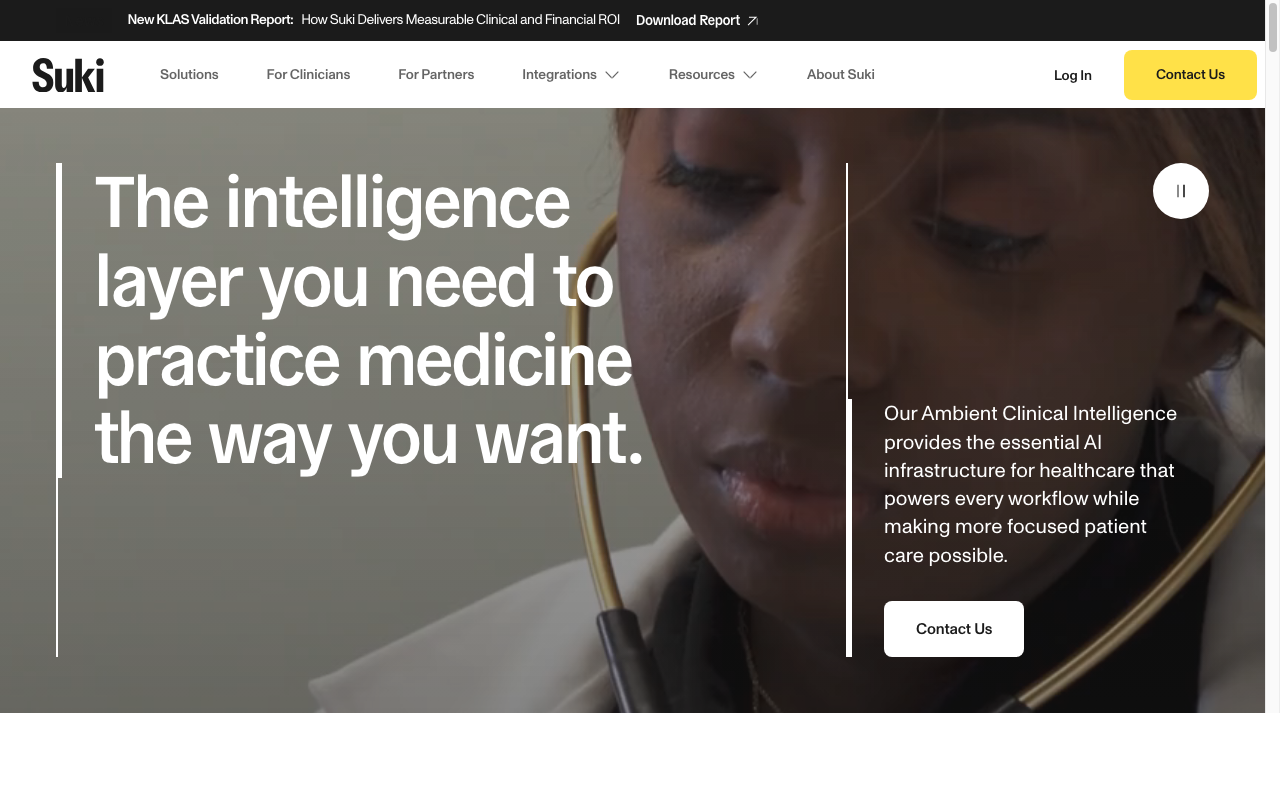
Suki AI is a voice-first clinical assistant that combines ambient scribing with spoken EHR commands, letting physicians dictate, place orders, navigate the chart, and ask questions by voice. It suits doctors who want voice control over the EHR, not just note generation.
Key Features
- Ambient note generation plus voice-driven EHR commands
- Spoken ordering, navigation, and chart Q&A
- Epic and Cerner integration
- Mobile-first clinical workflow
- Signed BAA for HIPAA use
Pros
- Combines scribing with hands-free EHR interaction
- Mature, widely deployed enterprise platform
- Strong EHR integration
Cons
- Significantly more expensive than small-practice scribes
- Cloud processing of PHI with required BAA
- More than solo doctors typically need
Pricing
Suki costs about $299/month for Suki Compose and $399/month for Suki Assistant, per provider, with enterprise quotes available. Compose totals about $10,764 per provider over three years.
User Reviews
Suki is a KLAS-recognized enterprise platform; large public consumer-review samples are limited, so evaluate via demo and reference checks. See Suki's site for current customer evidence.
Best for: Physicians and groups who want voice-driven EHR commands alongside ambient scribing and can justify the higher per-provider cost.
5. Abridge — Best for Health Systems and Enterprise Deployments
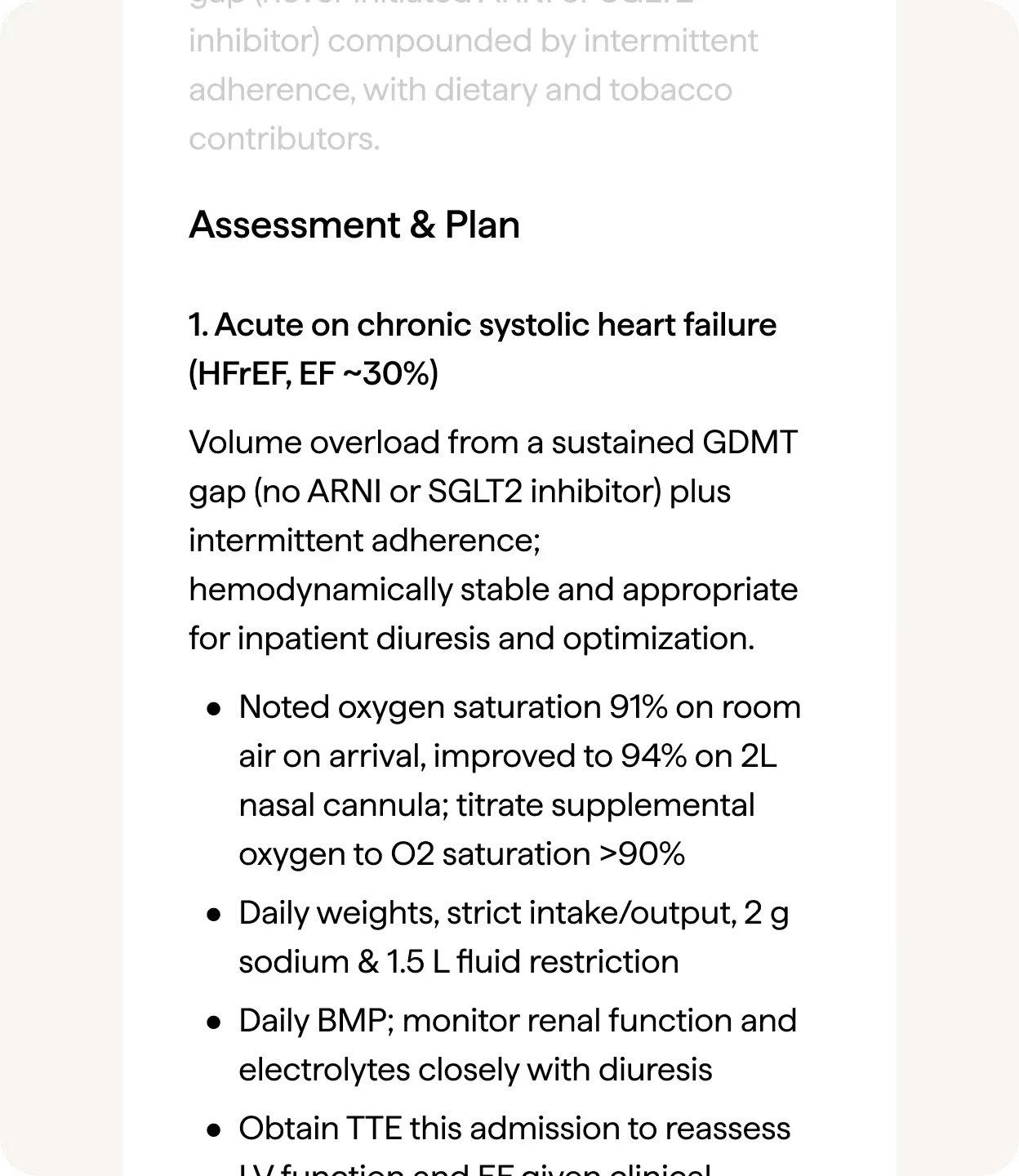
Abridge is an enterprise ambient documentation platform with deep Epic integration and revenue-cycle features, deployed widely across large health systems. It is the category leader at scale, recognized as #1 Best in KLAS for Ambient AI.
Key Features
- Ambient note generation with deep, embedded Epic workflows
- Revenue-cycle and coding support
- Enterprise-grade security and compliance
- Real-time, linked-evidence note generation
- Signed BAA and enterprise contracting
Pros
- Top KLAS recognition for ambient AI
- Deepest enterprise Epic integration
- Built for large-scale, multi-specialty deployment
Cons
- Enterprise-only with sales-led pricing — not for solo doctors
- Highest cost tier in this list
- Cloud PHI processing with full BAA and audit overhead
Pricing
Abridge is enterprise-only, with estimates around $2,500 per clinician per year (~$600/month per provider), varying by deployment. That is roughly $21,600 per provider over three years.
User Reviews
Abridge was named #1 Best in KLAS for Ambient AI for two consecutive years, with top marks across loyalty, relationship, and value.
Best for: Health systems and large groups standardizing on Epic that need enterprise-grade ambient documentation and revenue-cycle integration.
6. Nuance DAX Copilot — Best for Deep Enterprise EHR Integration
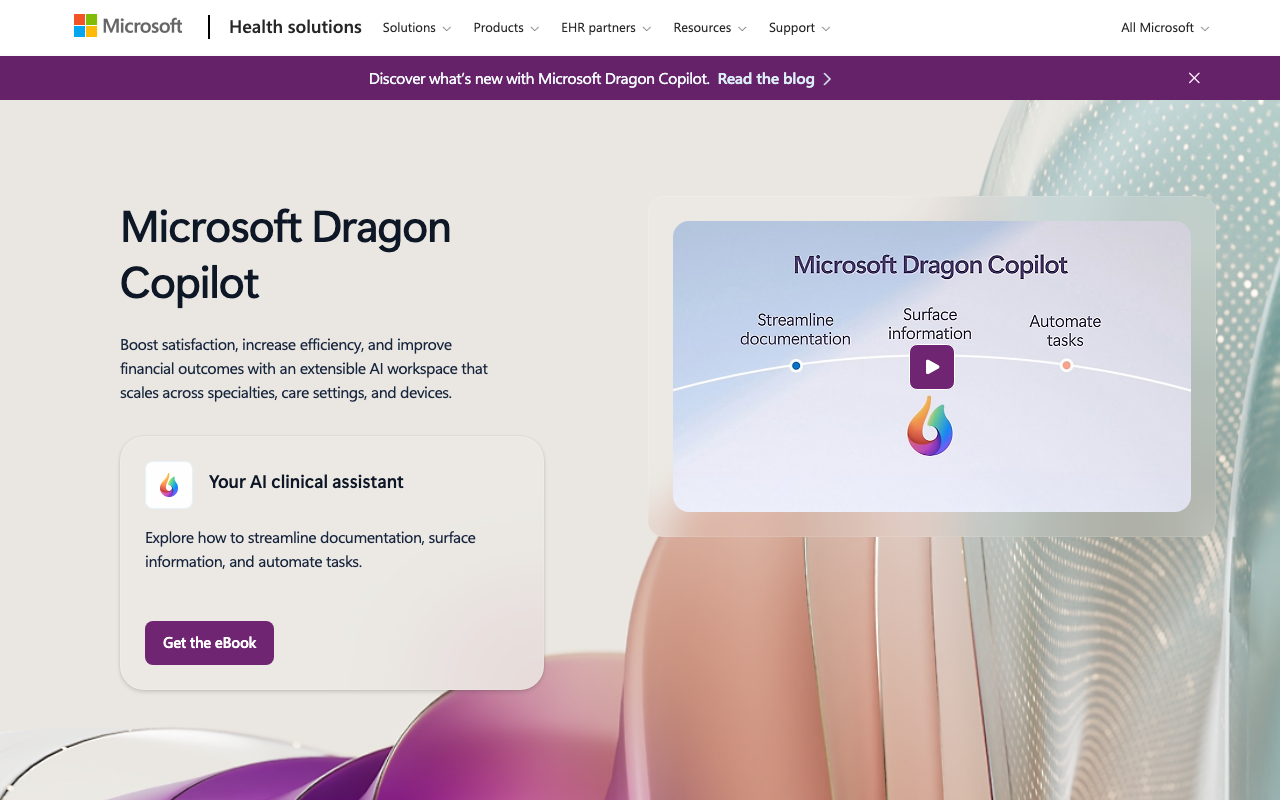
Nuance DAX Copilot, owned by Microsoft, is an ambient clinical documentation tool with one of the deepest EHR integrations and largest medical vocabularies available, built on Dragon's clinical heritage. It suits practices and systems already invested in the Microsoft and Nuance ecosystem.
Key Features
- Ambient note generation with deep Epic and EHR integration
- Extensive medical vocabulary from Dragon Medical lineage
- Cloud processing on Microsoft Azure with regional data residency
- Combined ambient scribing and dictation
- Signed BAA and enterprise contracting
Pros
- Industry-leading medical vocabulary depth
- Mature, Microsoft-backed platform
- Strong EHR and enterprise support
Cons
- Implementation and setup fees on top of monthly cost
- Among the most expensive options for small practices
- Cloud PHI processing with BAA and audit overhead
Pricing
DAX Copilot runs about $369–$830 per provider per month depending on group size, plus setup fees (around $650 for the first user). Small-practice rates near $600/month total roughly $21,600 per provider over three years; large systems negotiate to $150–$250/month per provider. For the related Dragon compliance framework, see our Is Dragon Safe? investigation.
User Reviews
DAX Copilot is widely deployed and KLAS-rated, with strong adoption across major health systems; pricing and references are obtained through Nuance or authorized resellers.
Best for: Practices and health systems that need maximum medical vocabulary depth and enterprise EHR integration within the Microsoft and Nuance ecosystem.
7. DeepScribe — Best for Specialty Practices Needing Human QA
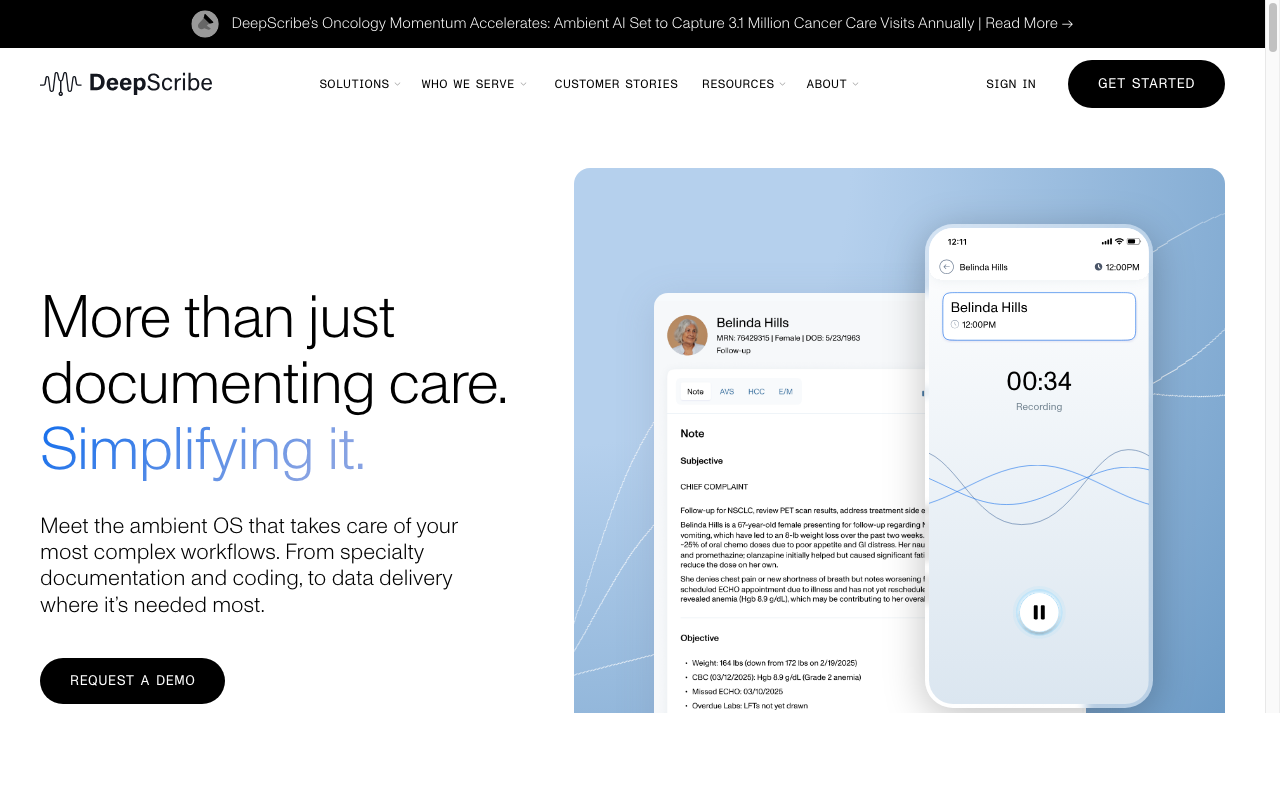
DeepScribe is an ambient AI scribe that pairs automated note generation with a human quality-assurance review layer and specialty-tuned documentation. It suits specialty practices that want extra accuracy assurance on complex notes.
Key Features
- Ambient note generation with human QA review
- Specialty-specific customization
- Direct EHR integrations
- Enterprise security and compliance
- Signed BAA for HIPAA use
Pros
- Human review layer improves note accuracy
- Strong specialty customization
- Top KLAS performance score
Cons
- Enterprise-oriented with annual contracts and setup fees
- Higher cost than small-practice scribes
- Cloud PHI processing with BAA overhead
Pricing
DeepScribe is typically $350–$500 per provider per month, enterprise-oriented, with setup fees of $500–$1,000. That is roughly $14,400 per provider over three years.
User Reviews
DeepScribe scored 98.8/100 with KLAS Research in 2025, among the highest-rated ambient scribes.
Best for: Specialty practices and groups that want a human QA layer and deep specialty customization on top of ambient documentation.
8. Nabla — Best for Multilingual Mid-Size Organizations

Nabla is an ambient AI assistant that generates clinical notes from patient encounters, with strong multilingual support, sold via demo and contract to practices and organizations. It suits mid-size groups that need ambient documentation across multiple languages.
Key Features
- Ambient note generation from patient conversations
- Multilingual encounter support
- EHR integration options
- Web and mobile apps
- Signed BAA for HIPAA use
Pros
- Strong multilingual capture
- Established platform with organizational deployments
- Flexible contract-based options
Cons
- Moved off transparent public pricing to sales-led contracts in 2026
- Cloud PHI processing with BAA overhead
- Less suited to individual solo doctors wanting instant self-serve setup
Pricing
Nabla is now contract-based with pricing via demo; earlier public anchors were around $119 per provider per month (~$4,284 over three years at that rate). Confirm current pricing directly with Nabla.
User Reviews
Nabla is an established, sales-led platform; large public consumer-review samples are limited, so evaluate via demo and reference checks on Nabla's site.
Best for: Mid-size organizations and multilingual practices that want ambient documentation and can engage a sales process.
How to Choose the Right AI Medical Scribe: A Decision Tree
Answer these four questions in order to narrow to the right tool for your situation.
1. Is keeping PHI off the cloud your top priority?
- Yes, privacy comes first → Choose Voibe (on-device, nothing uploaded, no BAA). Read our guide to why offline dictation matters.
- No, cloud is fine with a BAA → Continue to question 2.
2. Do you need the note generated automatically from the conversation, or will you dictate it yourself?
- I will dictate it myself → Voibe (lowest cost, full control, private).
- I want ambient auto-generation → Continue to question 3.
3. What is your practice size and budget?
- Solo or small practice, cost-sensitive → Freed AI ($39–$119/month) or Heidi Health (free to $150/month).
- Group or enterprise with budget → Continue to question 4.
4. What matters most at scale?
- Deepest Epic integration and KLAS leadership → Abridge.
- Largest medical vocabulary and Microsoft ecosystem → Nuance DAX Copilot.
- Human QA review and specialty depth → DeepScribe.
- Voice-driven EHR commands → Suki AI.
- Multilingual ambient capture → Nabla.
Tip
Many practices run a hybrid: an ambient scribe for high-volume encounters, plus Voibe for memos, addenda, and any PHI that should stay entirely off the cloud. The on-device tool's one-time price makes it inexpensive to add alongside a subscription scribe.
Best AI Medical Scribe for Your Situation: Use-Case Cheat Sheet
Match your specific scenario to the recommended tool below.
- Solo physician on Mac, privacy-first → Voibe — on-device, $149 once, no BAA, no audio uploaded.
- Small practice wanting cheapest ambient notes → Freed AI — $39–$119/month, fast setup, clinician-rated.
- Doctor who wants to trial ambient AI for free → Heidi Health — genuine free tier.
- Physician who wants voice control of the EHR → Suki AI — ambient scribing plus spoken commands.
- Large Epic-based health system → Abridge — #1 Best in KLAS, deepest Epic integration.
- Enterprise needing maximum medical vocabulary → Nuance DAX Copilot — Dragon lineage, Microsoft-backed.
- Specialty practice needing human-reviewed notes → DeepScribe — human QA layer.
- Multilingual mid-size group → Nabla — strong multilingual ambient capture.
- Doctor on spotty clinic Wi-Fi → Voibe on an Apple Silicon Mac — its on-device mode works fully offline, no internet required.
- Practice avoiding recurring subscriptions → Voibe — one-time lifetime license.
- Telehealth-heavy clinician → Abridge, Suki, or Nabla for ambient capture (with consent), or Voibe to dictate into any field.
- Doctor switching from Rev or Dragon on Mac → Voibe — see our Rev alternatives for doctors and best dictation software for doctors guides.
Frequently Asked Questions
Common questions about AI medical scribes for doctors and physicians in 2026, grouped by theme.
The Basics
What is an AI medical scribe? An AI medical scribe is software that helps doctors create clinical documentation. Ambient scribes listen to the patient encounter and auto-generate a structured note; dictation tools convert your deliberately spoken words into text. Both reduce charting time, but they work differently and handle data differently.
Can Voibe work as a medical scribe? Yes, in a voice-driven sense. With its hands-free long-form dictation mode, Voibe lets you run a continuous session and narrate a full clinical note without holding a key, transcribed locally on your Mac. It differs from ambient scribes in that you speak the note rather than having an AI auto-generate it from a recording of the patient conversation. For doctors prioritizing privacy, cost, and simple setup, that voice-driven, on-device scribe workflow is the strongest documentation option.
Privacy & HIPAA
Which approach is more private? On-device dictation is the most private because patient audio never leaves the device, so there is no cloud copy of the encounter. Cloud ambient scribes can be compliant with a BAA and encryption, but they still transmit and store PHI on vendor servers. See our offline dictation privacy guide.
Do I need a BAA? You need a BAA with any vendor that processes PHI on your behalf — which includes all cloud ambient scribes. On-device tools like Voibe require no BAA because there is no third-party processor; HIPAA still applies to your device. See our dictation and HIPAA guide.
Pricing & Value
What is the cheapest AI medical scribe? Among ambient scribes, Heidi Health has a free tier and Freed Starter is $39/month. The lowest total cost overall is Voibe at $149 one-time, which over three years is about 95% cheaper than Freed Core and roughly 99% cheaper than an enterprise scribe.
Are AI scribes worth the monthly cost? For high-volume practices that value fully hands-off documentation, ambient scribes can pay for themselves in reclaimed time. For doctors comfortable dictating their own notes, an on-device tool delivers most of the time savings at a fraction of the cost. See our cloud vs local dictation comparison.
Workflow & Setup
Which is fastest to set up? On-device dictation tools install in minutes with no integration project. Ambient enterprise scribes (Abridge, DAX Copilot, DeepScribe) require EHR integration and onboarding before first use; Freed and Heidi are faster to start than enterprise tools.
Can I use more than one tool? Yes. Many practices pair an ambient scribe for encounters with an on-device dictation tool for addenda, memos, and sensitive PHI that should stay local. The one-time price of an on-device tool makes hybrid setups inexpensive.
The Bottom Line: Which AI Medical Scribe Should You Choose?
The right AI medical scribe depends on whether you optimize for privacy and cost or for fully hands-off automation. If privacy, cost-effectiveness, and easy setup are your priorities, Voibe is the best choice in 2026 — it transcribes speech entirely on-device on your Mac, costs $149 once instead of $39–$830+ every month, requires no BAA, and is ready to use in minutes. The trade-off is that you dictate the note yourself rather than having it auto-generated.
If you want a hands-off ambient scribe that writes the note from the conversation, Freed AI is the best value for solo and small practices, Heidi Health is the best way to try ambient AI for free, and Abridge and Nuance DAX Copilot lead at the health-system scale. Many doctors get the best of both worlds by running an ambient scribe for encounters and Voibe for everything that should stay off the cloud.
Try Voibe for free to see how private, one-time-cost, on-device documentation fits your practice — or learn more about Voibe.
Related reading:
- 7 Best Dictation Software for Doctors (2026)
- Best Rev.com Alternatives for Doctors and Small Practices
- HIPAA Dictation: What Doctors Need to Know
- Why Offline Dictation Matters
Still deciding between an ambient scribe and plain dictation? That is the first fork, and our guide to medical dictation AI works it through — how the four-stage pipeline runs, what to check before you dictate a single patient detail, and which tool fits on Mac or Windows.
Best AI Dictation and Meeting Notes for Confidential Work
Draft letters, notes and emails 5x faster. Get meeting notes without a bot joining your call. Nothing used to train AI.
- Mac + Windows
- No bot in your calls
- Nothing used to train AI
- 7-day free trial
Want to compare plans first? View pricing →
Related Articles
Best Wispr Flow Alternatives for Lawyers and Small Law Firms (2026)
8 Wispr Flow alternatives for lawyers (2026): on-device dictation, HIPAA-aligned cloud, and legal-vocabulary tools compared on privilege exposure, post-Delve compliance, and 3-year TCO.
Best Rev.com Alternatives for Doctors and Small Practices (2026)
8 Rev.com alternatives for doctors and small practices (2026): on-device dictation, AI medical scribes, and HIPAA-aligned cloud transcription compared on PHI exposure, BAA, and cost.
6 Best AI Dictation Apps for Windows — Ranked by Who Actually Built for Windows
Six AI dictation apps are actually great on Windows in 2026. We ranked them — including the one we built from the ground up for Windows — with verified pricing.